No. 05
川崎和楽 · 楽焼 · 羽子板香合
Kawasaki Waraku · Raku-yaki · Hagoita Kōgō
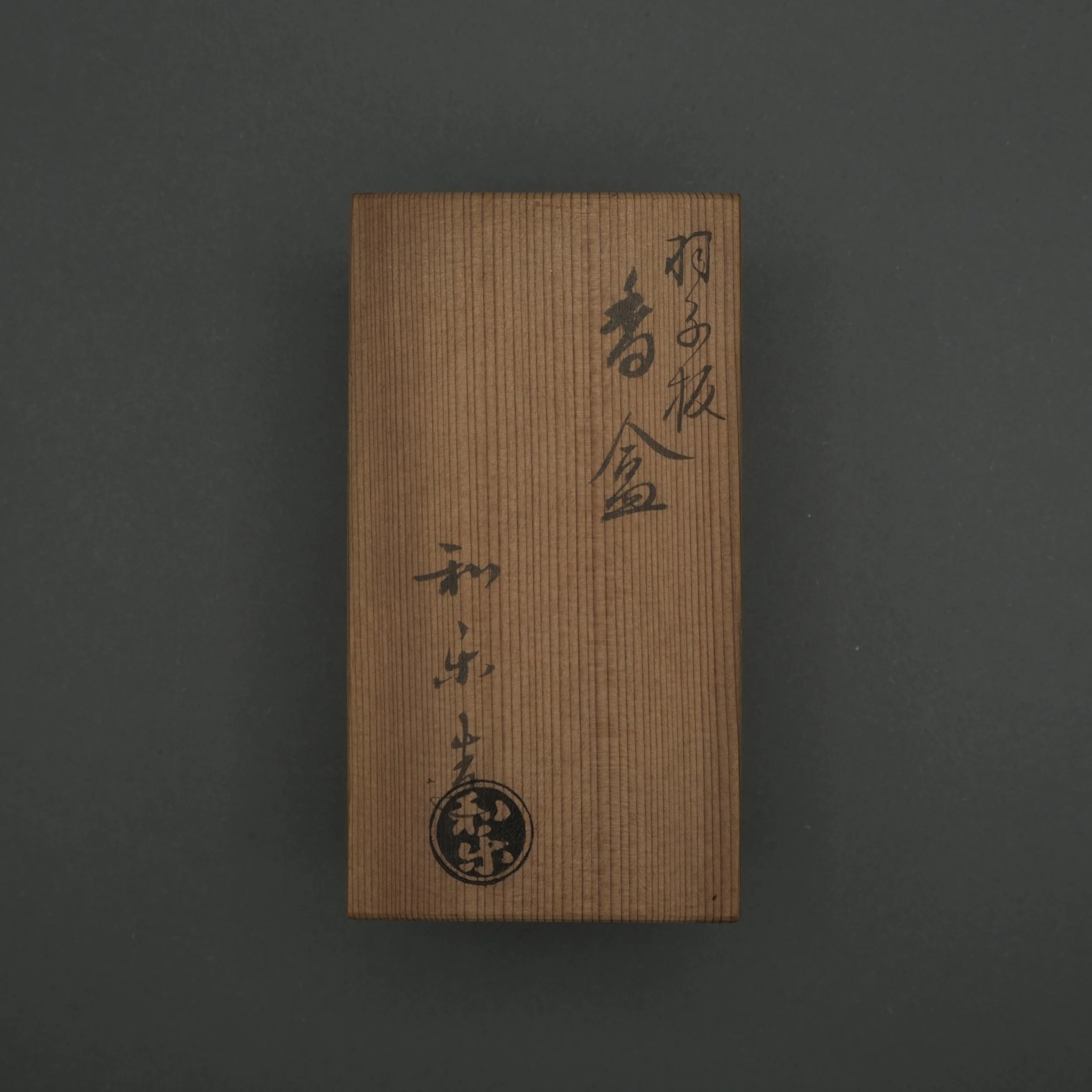
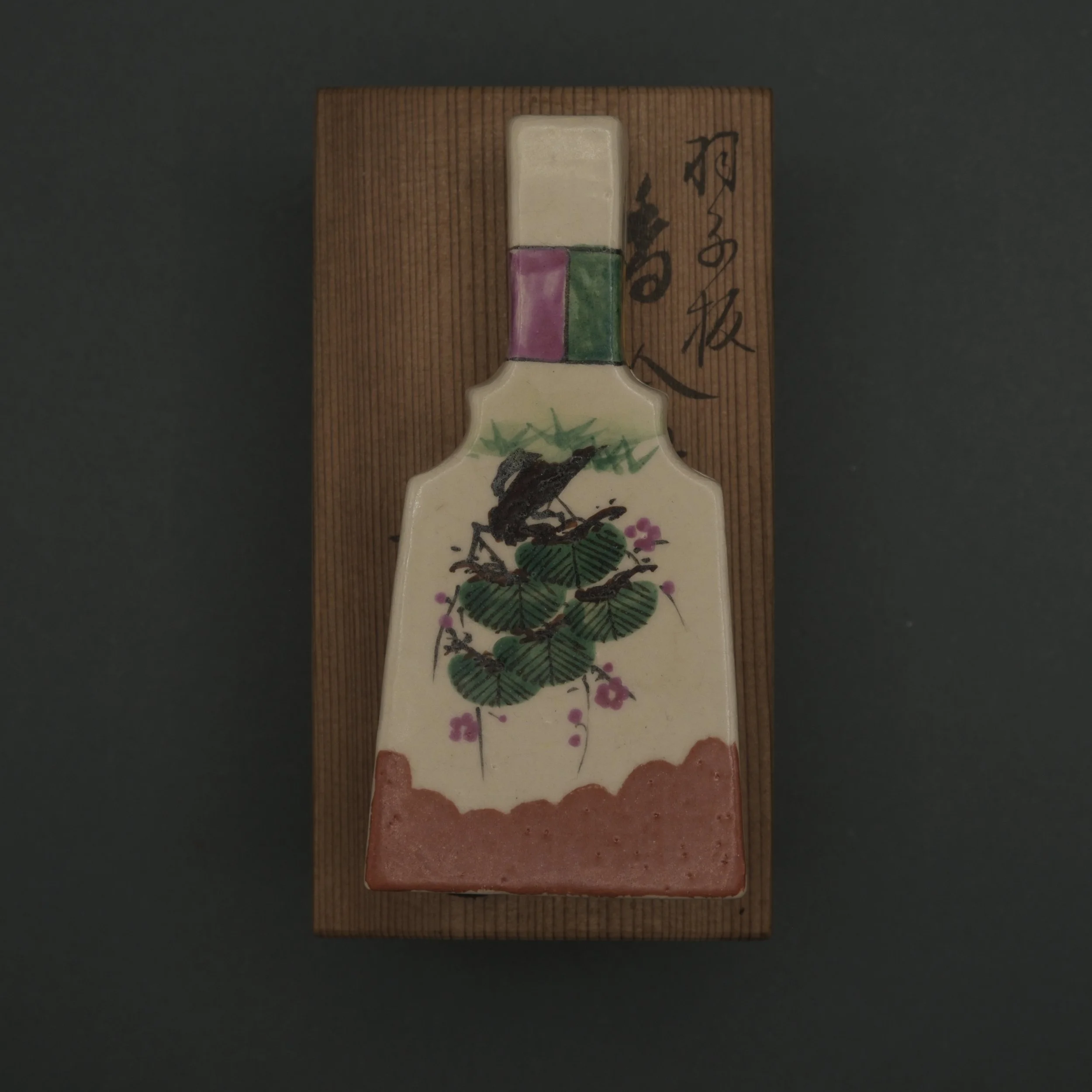
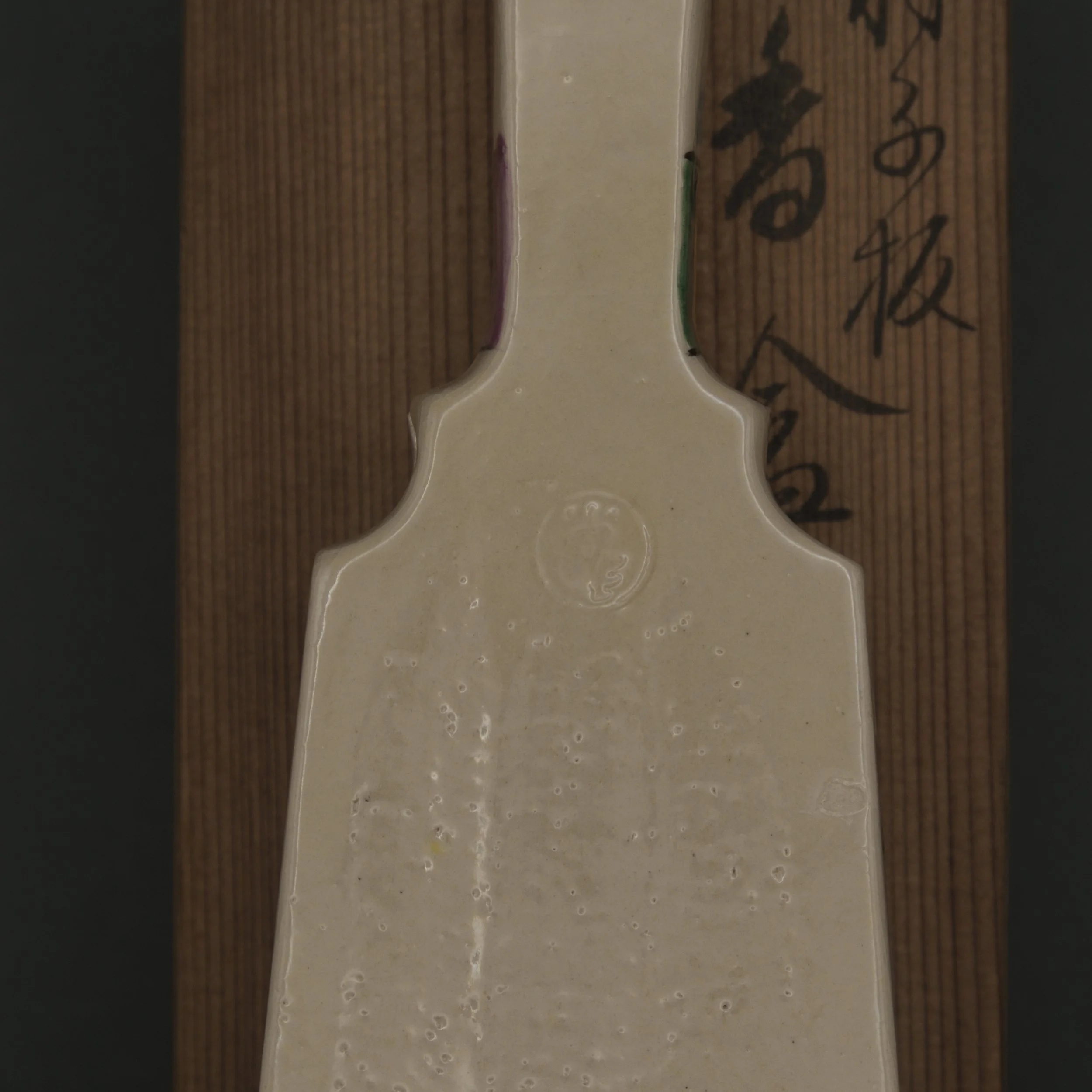
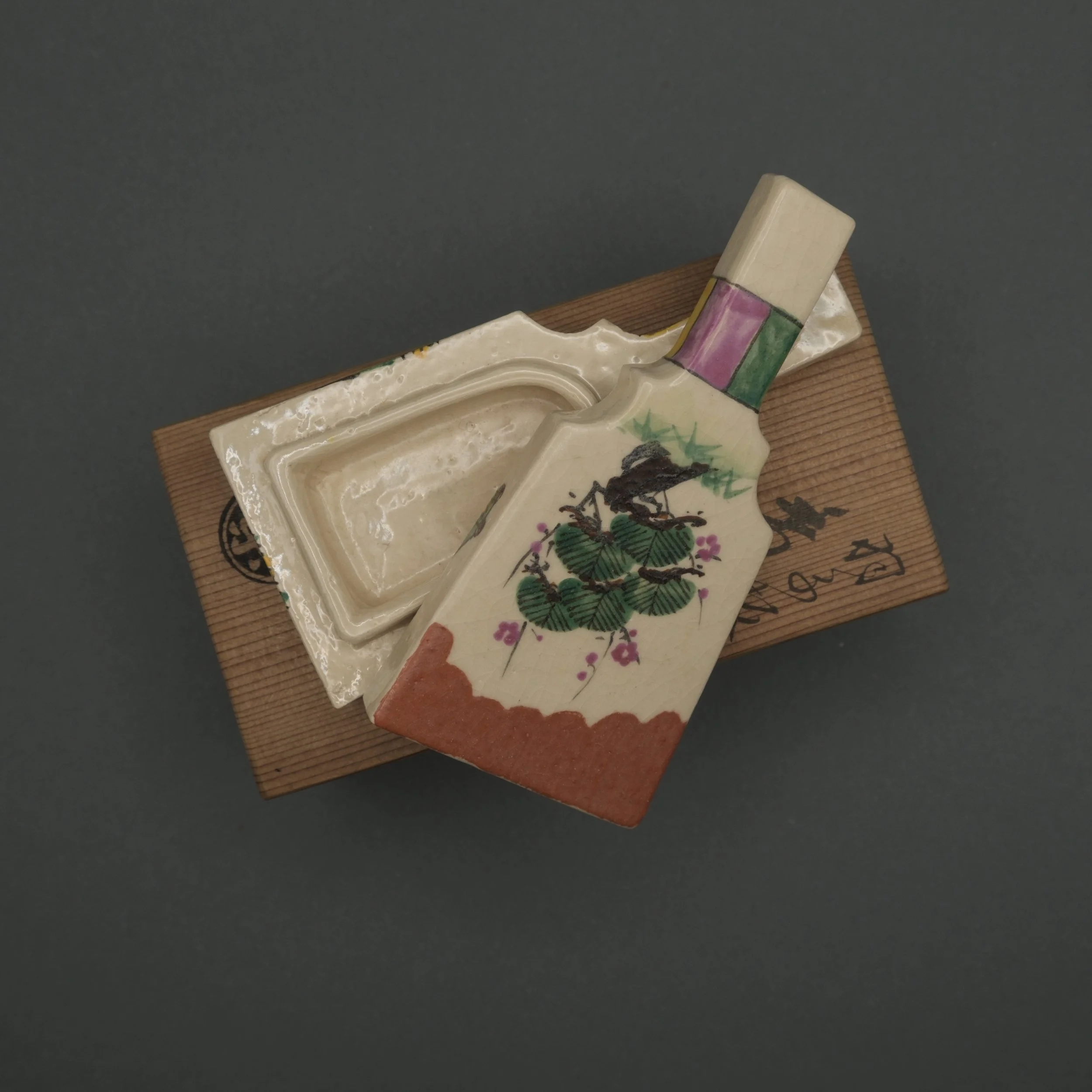
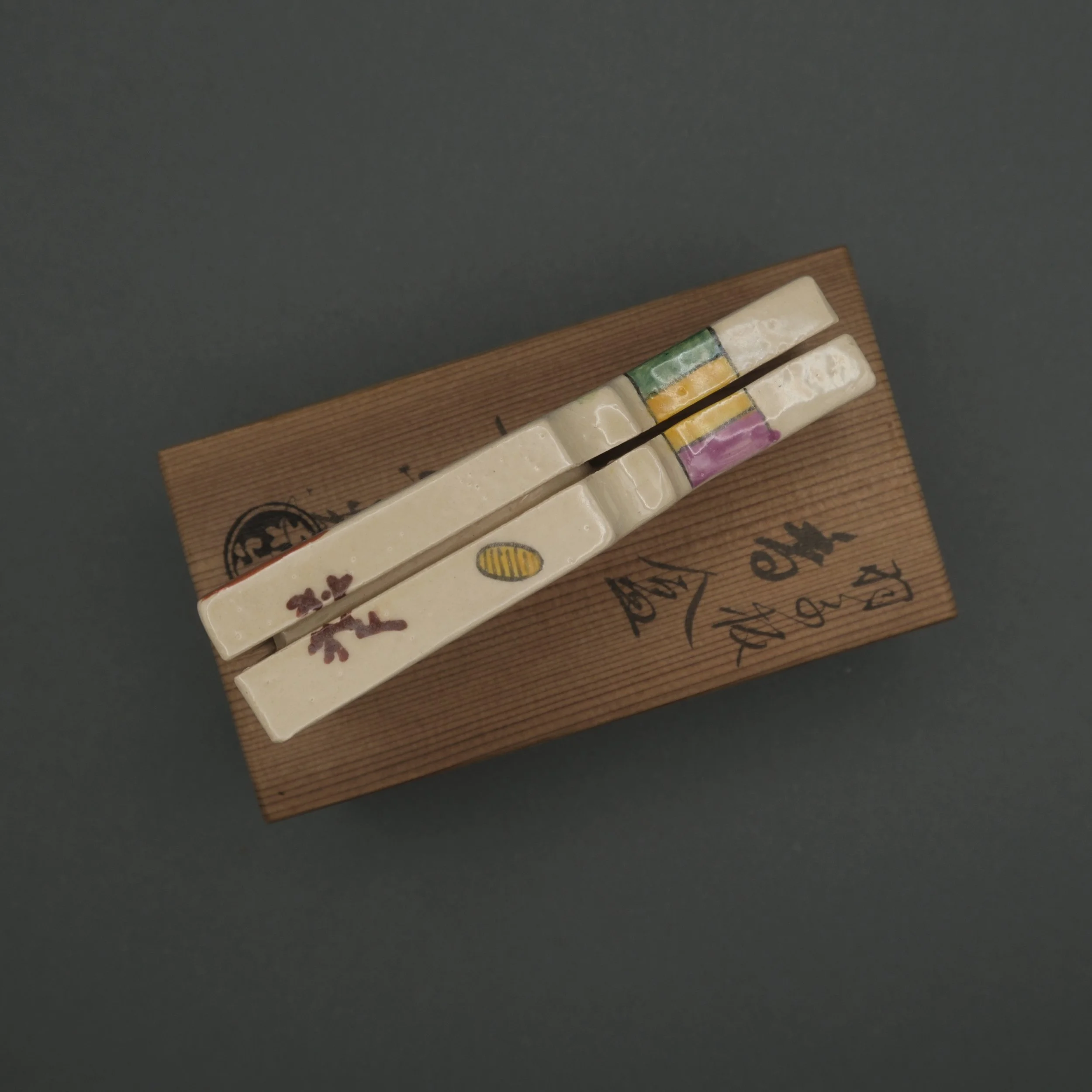
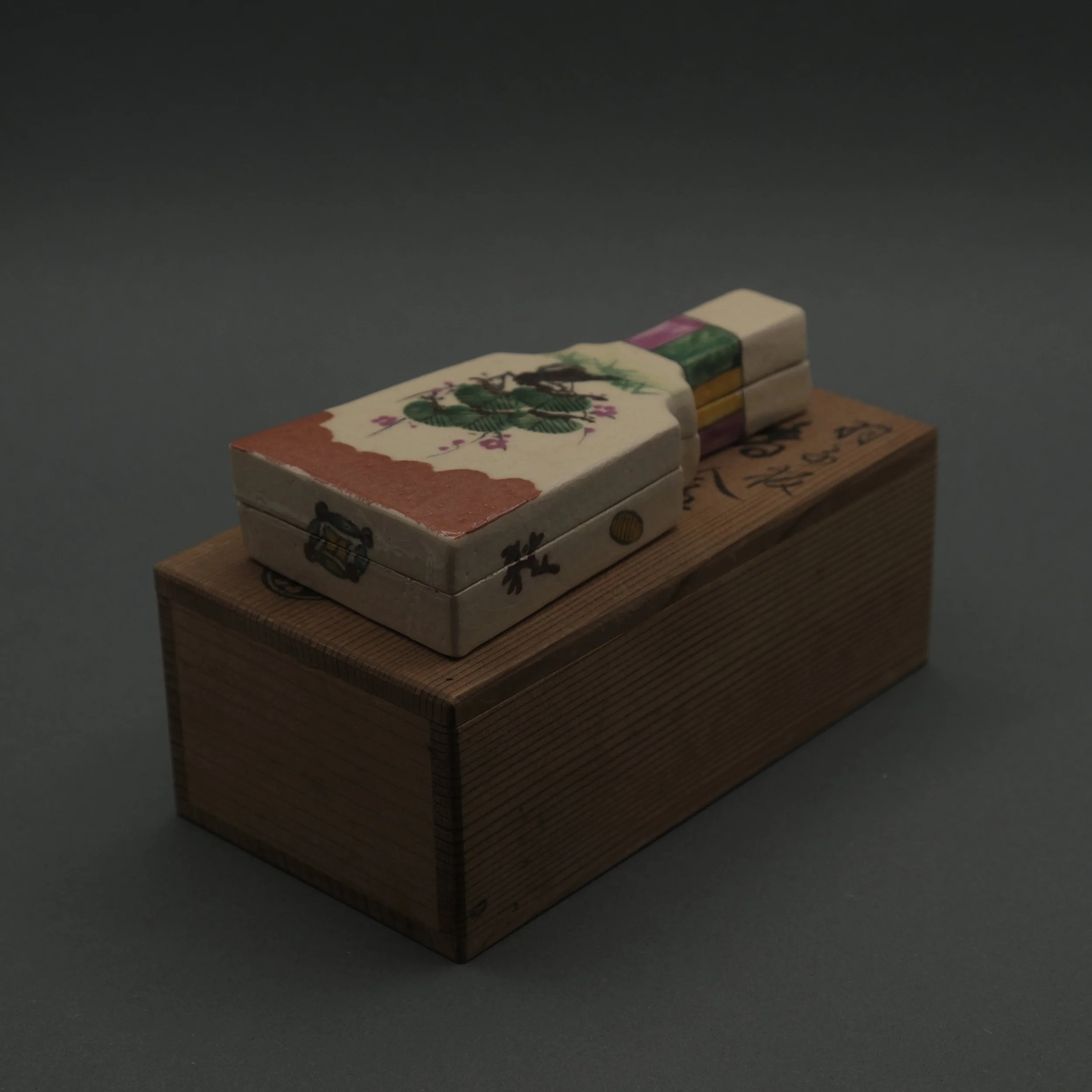
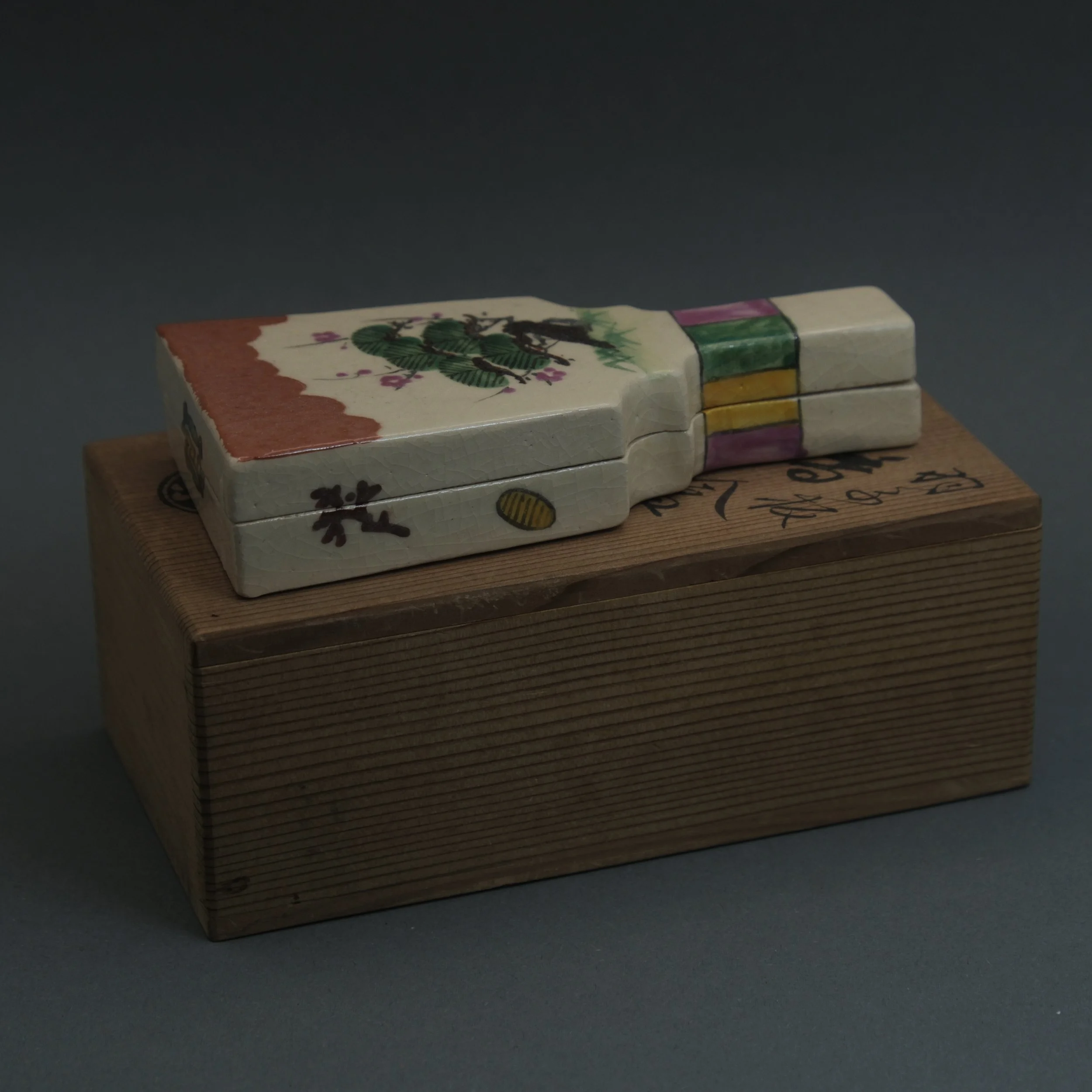
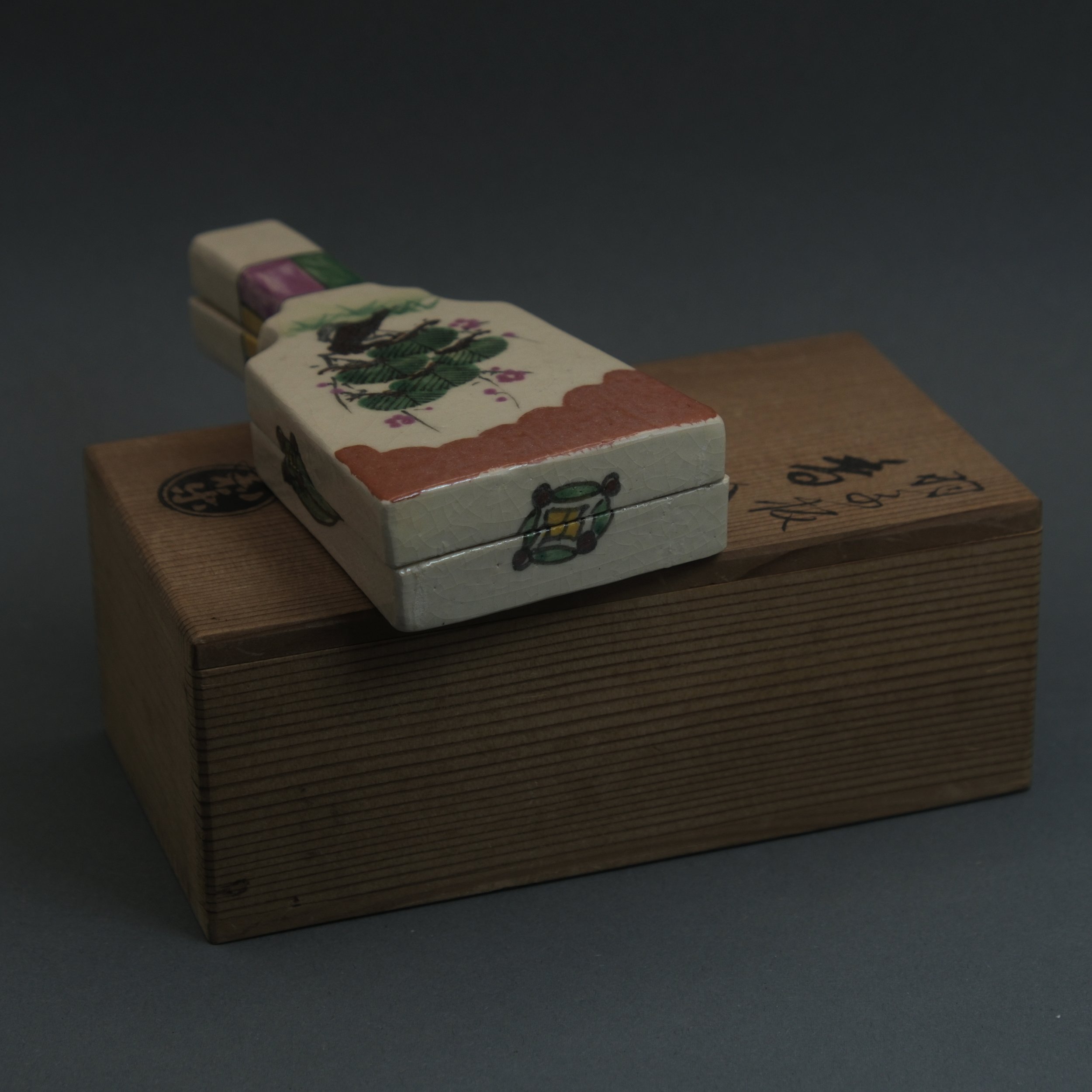
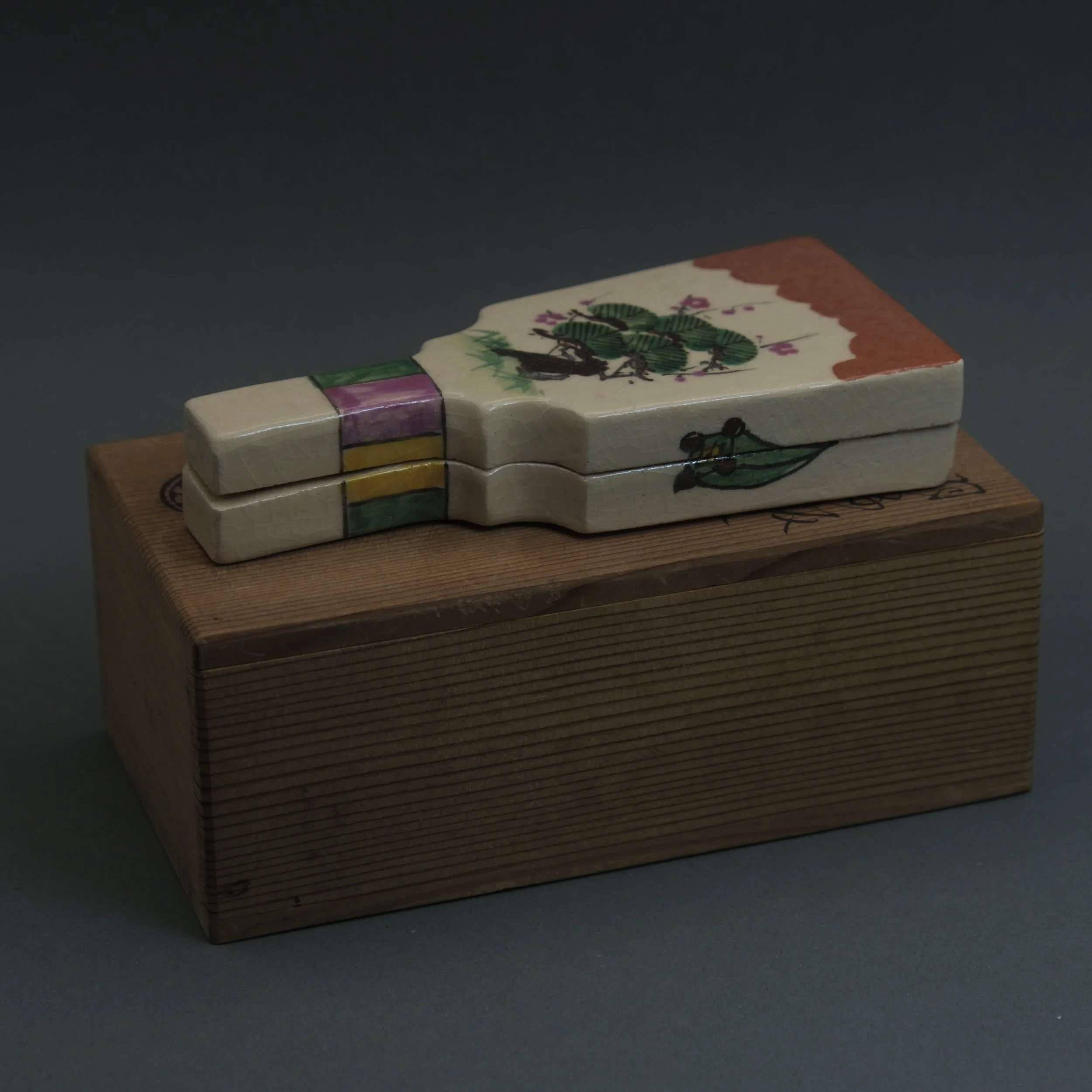
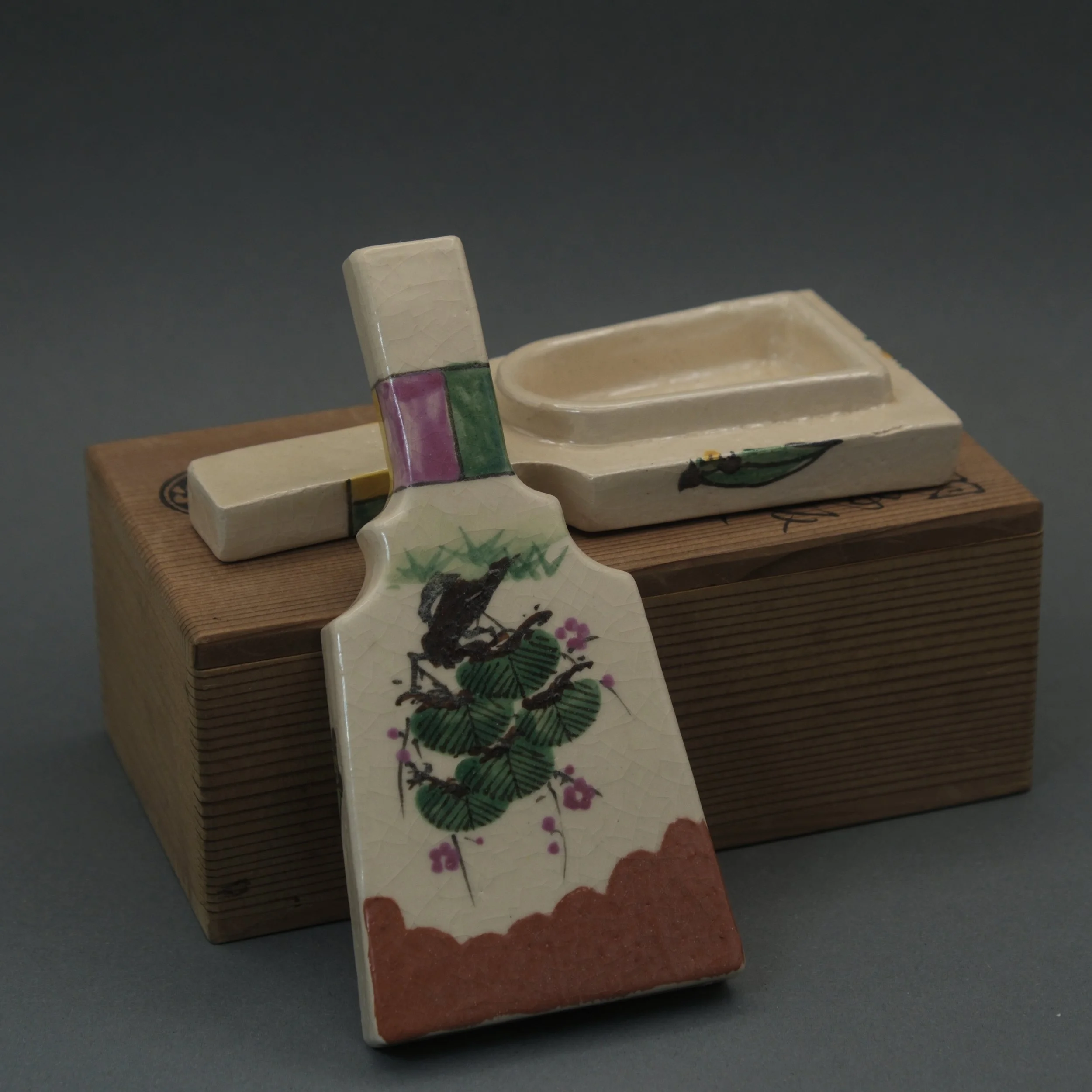
This piece came into the collection through Nelson.
After our third trip to Japan in 2024, he had really developed a love for antiques. Around that time, he was especially drawn to 九谷焼 · Kutani and 薩摩焼 · Satsuma-yaki, and he had started looking much more closely at old ceramics on his own.
This 羽子板香合 — hagoita kōgō caught his attention during an online auction.
I am not surprised that it did.
The colours and decoration have something in common with the kind of Kutani and Satsuma pieces he was interested in at the time, but I think the pine was probably just as important.
Nelson loves pine trees.
Whenever we are in Japan, he notices them everywhere — not only the trees themselves, but the amount of care that has gone into shaping and maintaining them over generations. Some of them have been living with buildings, gardens and streets for centuries, and you can see the work in every branch.
One of his favourites is in Kinosaki Onsen: a pine with a long branch trained horizontally along the roofline of a Japanese house, stretching perhaps six or seven metres. He still talks about it.
So when this kōgō appeared at auction, with its painted pine and slightly old-fashioned decorative character, it felt very much like something he would choose.
What I did not know was that he had already bought it.
He kept the whole thing a secret.
I only found out when the parcel finally arrived. Nelson signed for it, opened it with the excitement of someone who had been waiting far too long, and almost shouted:
“Look! Look what I got!”
That is probably my favourite part of this piece.
Not the maker, not the age, not even the fact that it came in its original wooden box.
It is the memory of how excited he was to show it to me.
By then, collecting had stopped being something I was introducing him to.
It had become his too.
川崎和楽 · Kawasaki Waraku
楽焼 · Raku-yaki
羽子板香合 · Hagoita Kōgō
Hagoita-shaped ceramic kōgō with polychrome decoration, pine and floral motifs
Dimensions to be added
Kyoto, Japan
With original wooden box and Waraku seal
Estimated date: Shōwa period, likely late 20th century
Acquired by Nelson via online auction, 2024
Online auction
Reference
楽焼 · Raku-yaki — Kyoto ceramic tradition closely associated with tea wares
羽子板 · Hagoita — traditional Japanese battledore associated with the New Year
香合 · Kōgō — small lidded container for incense used in the tea ceremony
松 · Matsu — pine, a traditional symbol of longevity and endurance
和楽造 · Waraku-zō — made by Waraku