No. 04
賞美堂本店 · 其泉 · 有田焼
Shobidō Honten · Kisen · Arita-yaki
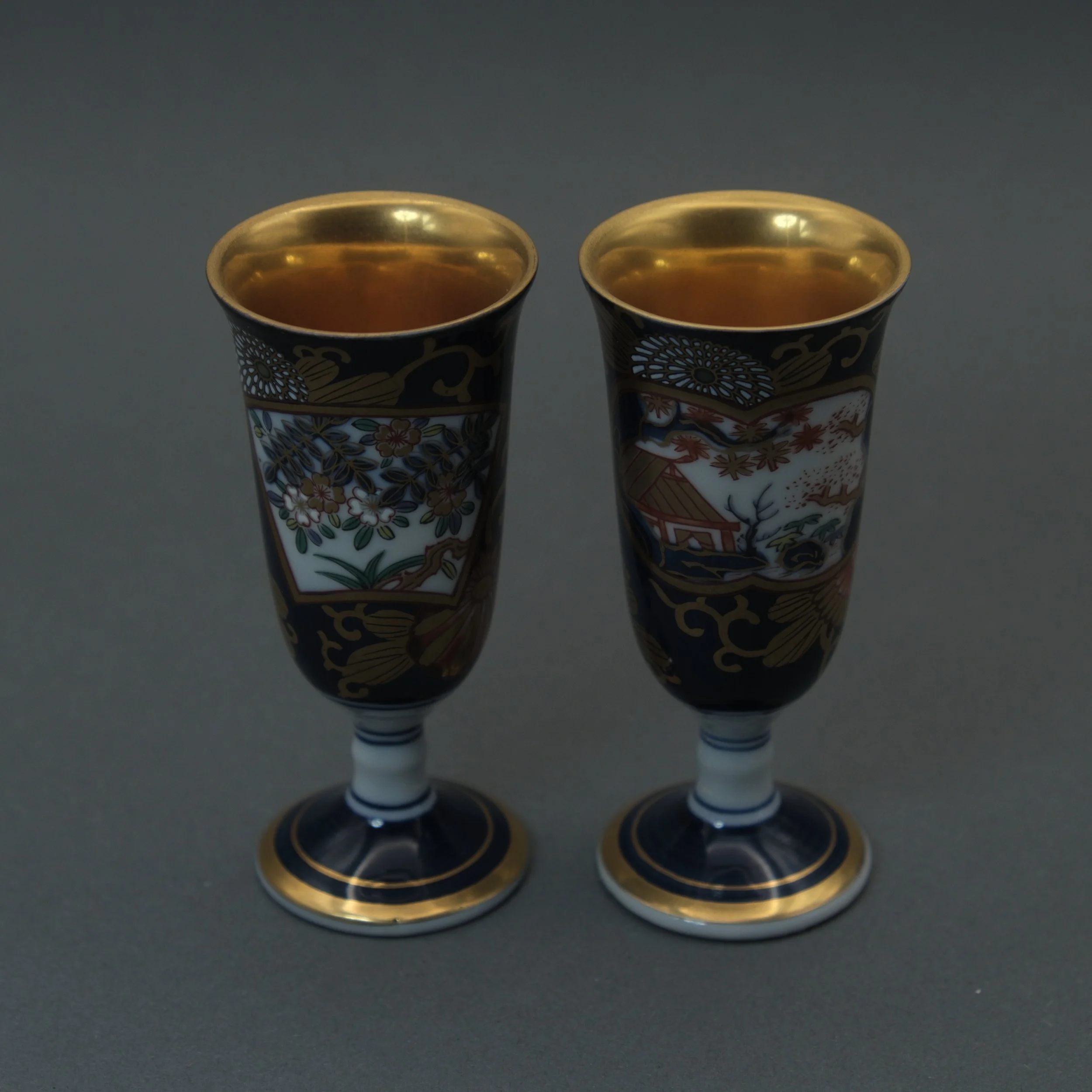
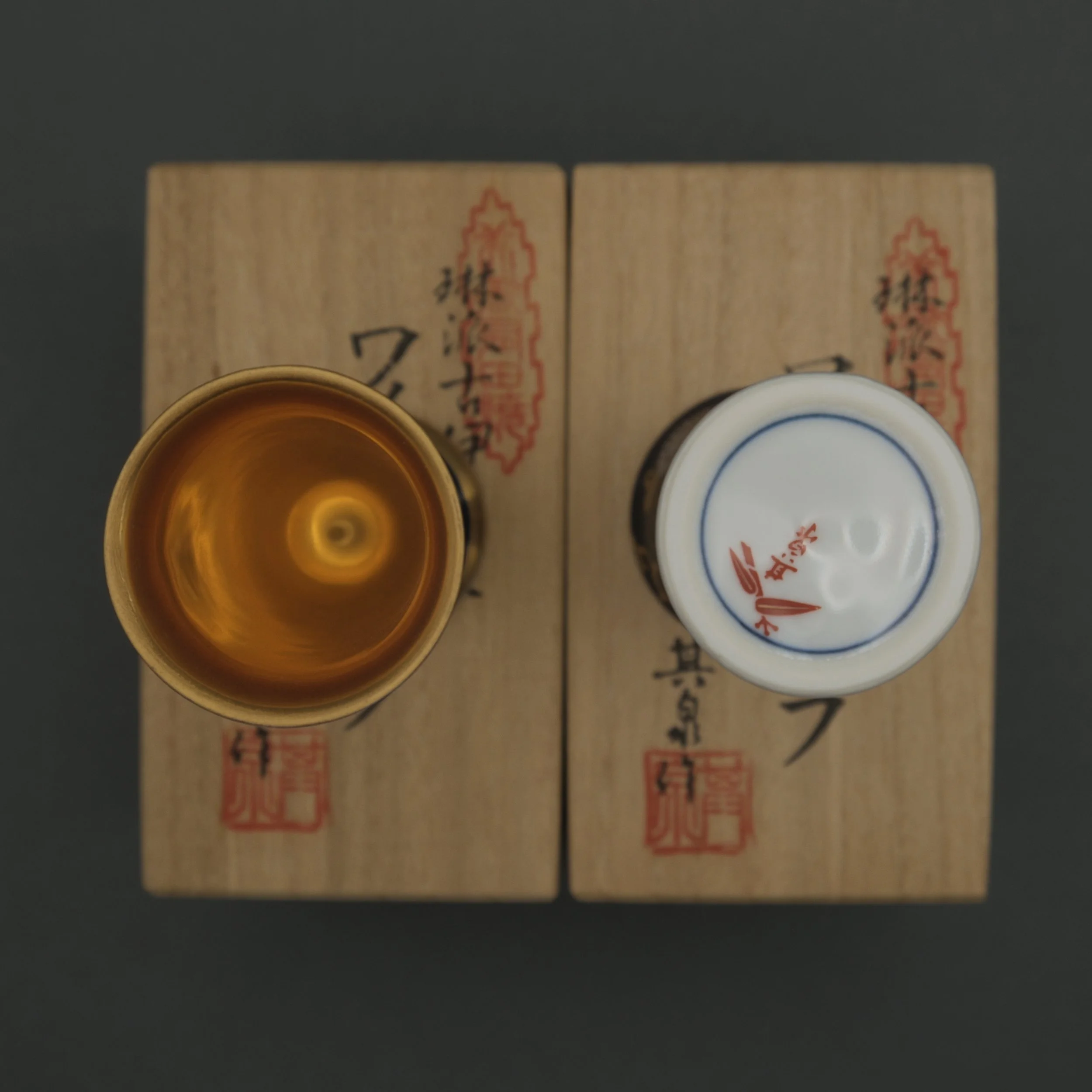
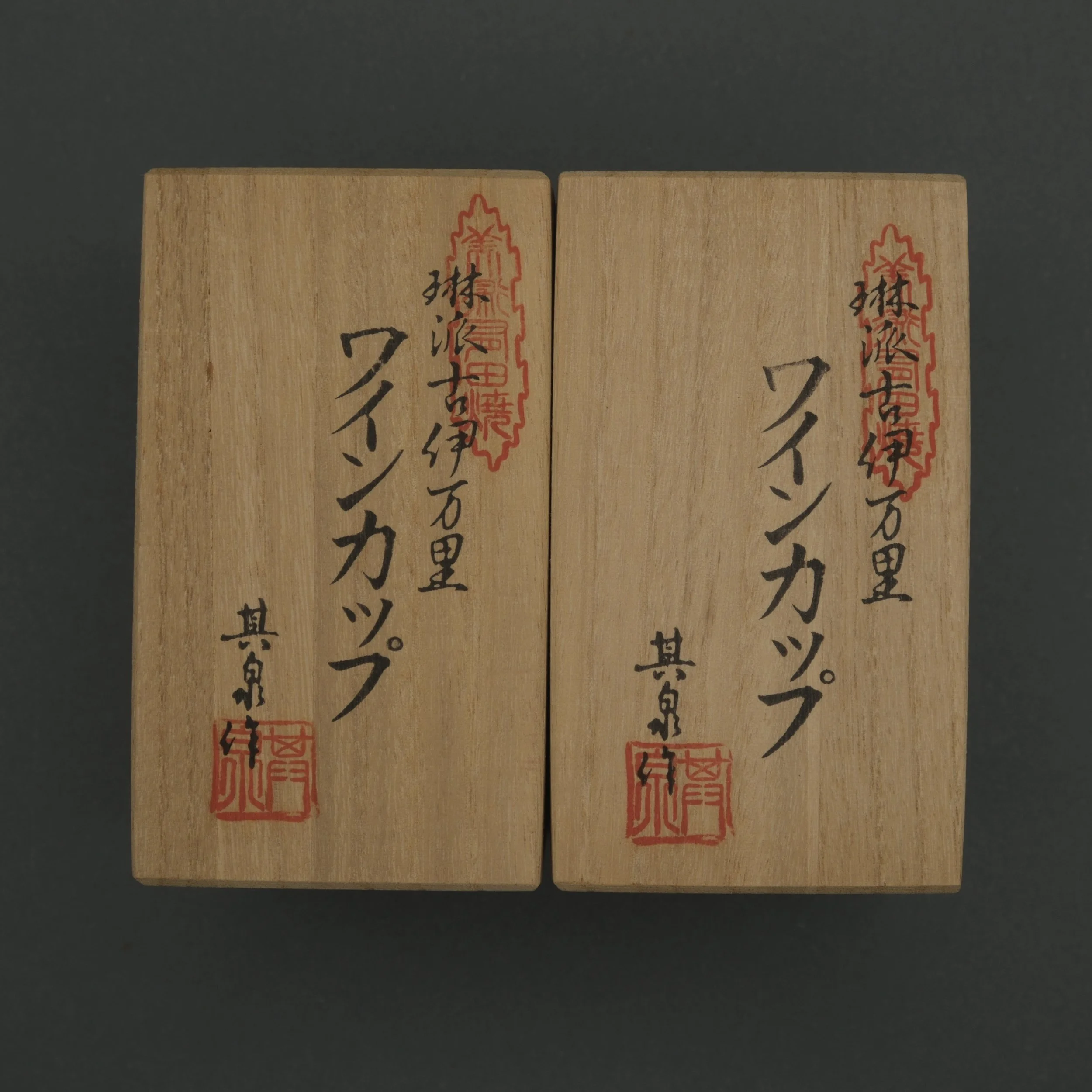
We first found this piece at 古美術やかた in Kyoto, but the story really begins a year earlier.
In June 2023, during our second honeymoon in Japan, Nelson was still very new to Japanese antiques and ceramics. Before the trip, I had told him that one of the things I wanted to do was spend some time antique hunting. He started researching places we could visit and found a tiny shop in Kyoto called 骨董・古布 うたかた.
That was where we saw a boxed set of five old sake cups.
At the time, Nelson could not quite understand why someone would spend that much money on something that, in his mind, would probably just sit on display. I told him that I do not really collect things that way. If I buy something, I want to use it.
That seemed to make him even more nervous.
The idea of actually using expensive late-Edo antiques at the table was almost more stressful to him than buying them in the first place. He also was not particularly interested in Kutani then, especially the red-and-gold akae / kinrande style, which he thought felt rather old-fashioned.
So we left without them.
And then, of course, he could not stop thinking about them.
When we returned to Japan in March 2024, he went straight back to the shop hoping they might still be there. They were gone.
After that, something changed.
He became determined to find something from the same period, or at least something that carried a similar feeling. We started visiting antique shops constantly, and 古美術やかた became one of the places we kept returning to.
By the time we came back to Kyoto again in September 2024 for my birthday, Nelson was still searching.
While he was looking through the shop, I wandered around and found this 其泉 · Kisen wine cup, together with the 染付茄子皿 that later became No. 01 in the collection.
I was immediately drawn to it.
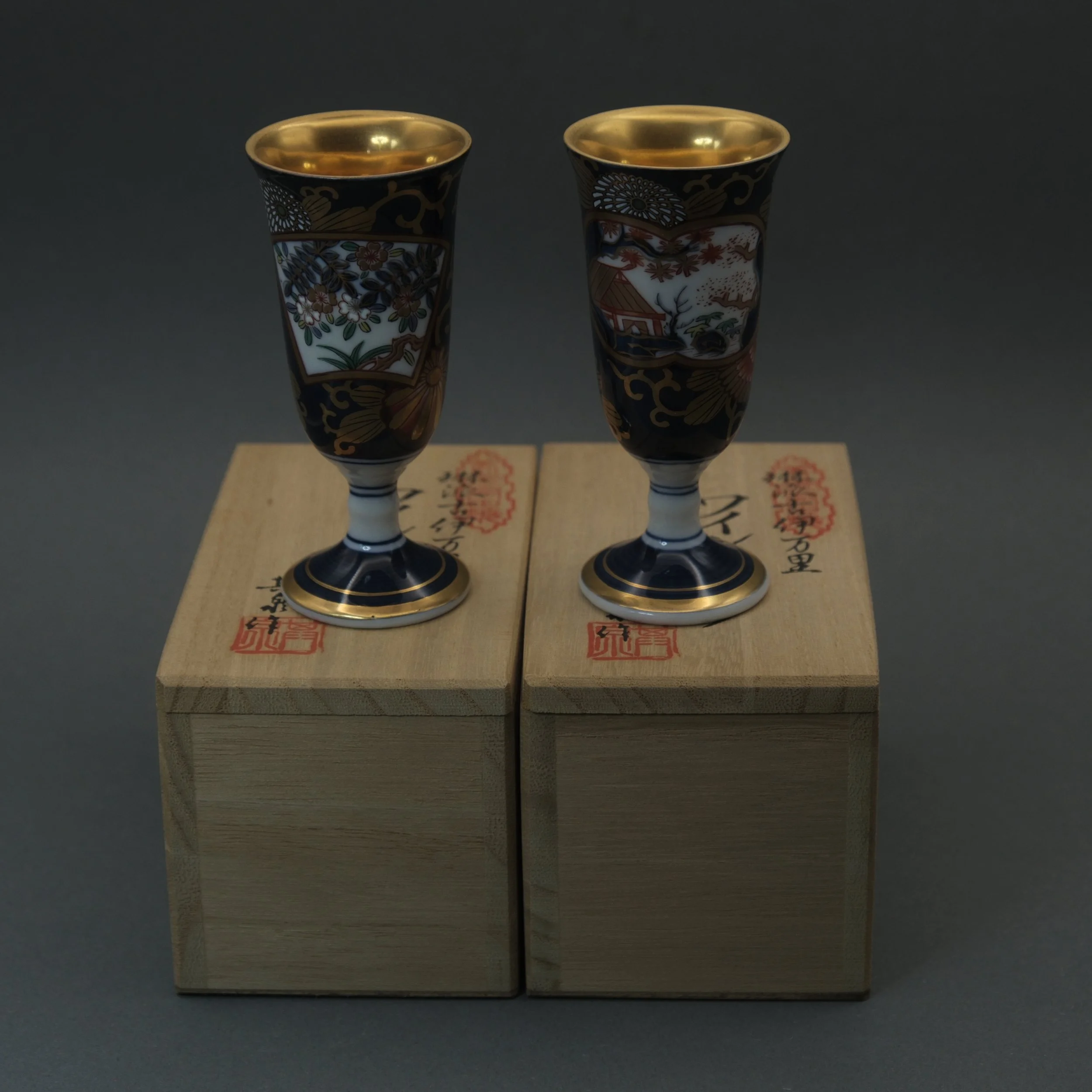
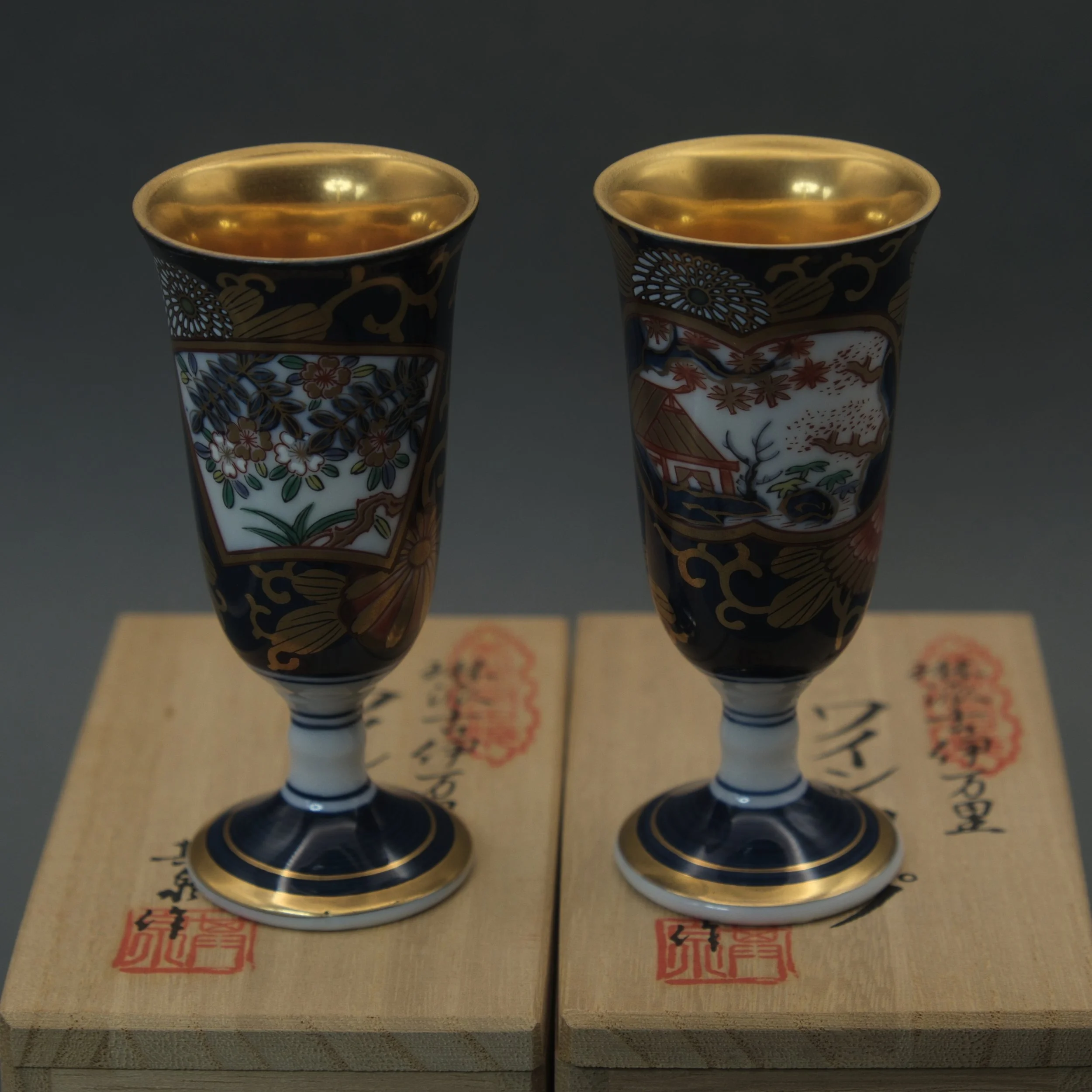
I have always liked Ko-Imari style, and 其泉 is known for particularly refined, detailed decoration. The deep cobalt blue, red, gold and small painted reserve felt very familiar to me — decorative without being clumsy, traditional without feeling heavy.
The only disappointment was that there was just one.
I remember thinking how nice it would have been to have a matching pair, but that was that. We bought the one piece and carried on with the trip.
A few days later, on our last day in Kyoto, we happened to be in the neighbourhood again.
We thought, why not have one last quick look?
And there it was.
Another one.
Exactly the same.
I bought it immediately.
There was something almost absurdly satisfying about it. We had spent so much time searching for things that had disappeared, missed pieces, objects that had already found another home — and then, completely unexpectedly, this one came back to us twice.
So now there are two.
A pair that was never really found as a pair.
賞美堂本店 · Shobidō Honten
其泉 · Kisen
有田焼 · Arita-yaki
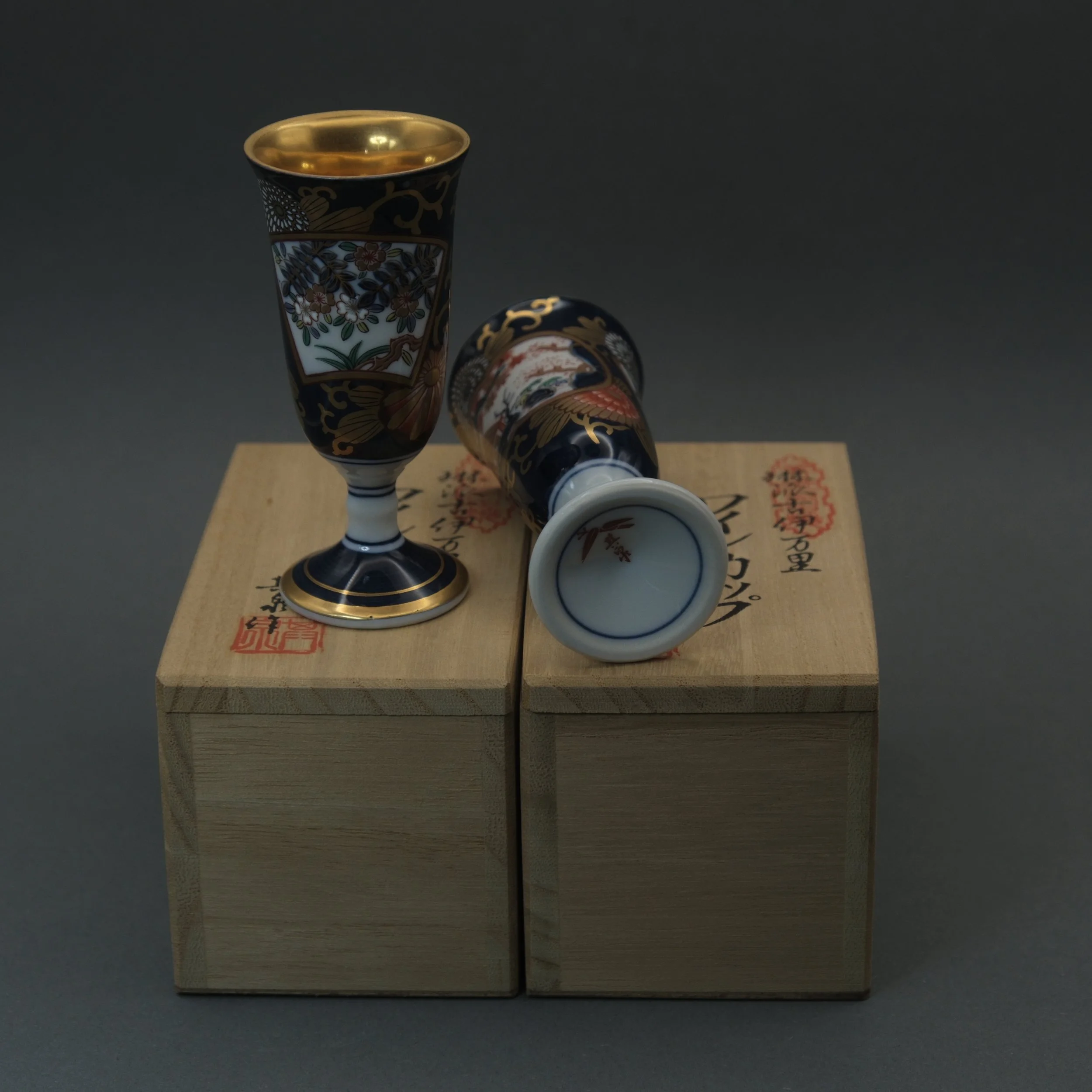
琳派古伊万里様式 ワインカップ · Rinpa Ko-Imari Yōshiki Wine Cup
Pair of porcelain wine cups with cobalt-blue ground, polychrome overglaze enamel and gold decoration
Approx. Ø 4.3 × H 9.4 cm each
Arita, Saga, Japan
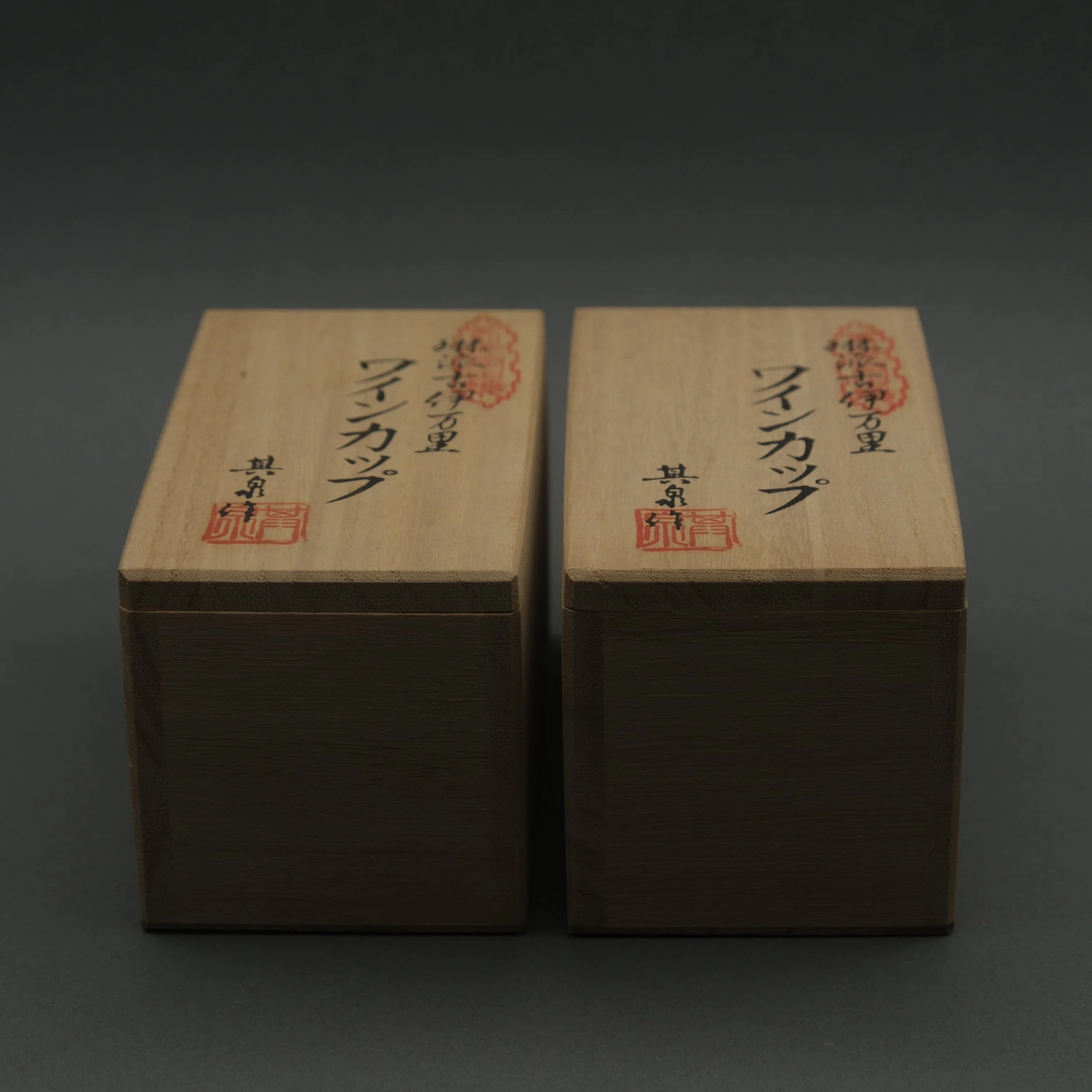
With original wooden box and 其泉 seal
Estimated date: Late 20th century, possibly c. 1990s
Acquired in Kyoto, September 2024
古美術やかた
Reference
有田焼 · Arita-yaki — Arita porcelain
古伊万里 · Ko-Imari — old Imari style
琳派 · Rinpa — decorative art tradition known for bold composition and gold
其泉 · Kisen — Shobidō Honten’s Arita ware brand
ワインカップ · Wain Kappu — wine cup / goblet