No. 02
藤岡岩花堂 · 九谷焼 · 古代模様中皿
Fujioka Gankadō · Kutani-yaki · Kodai Moyō Chūzara
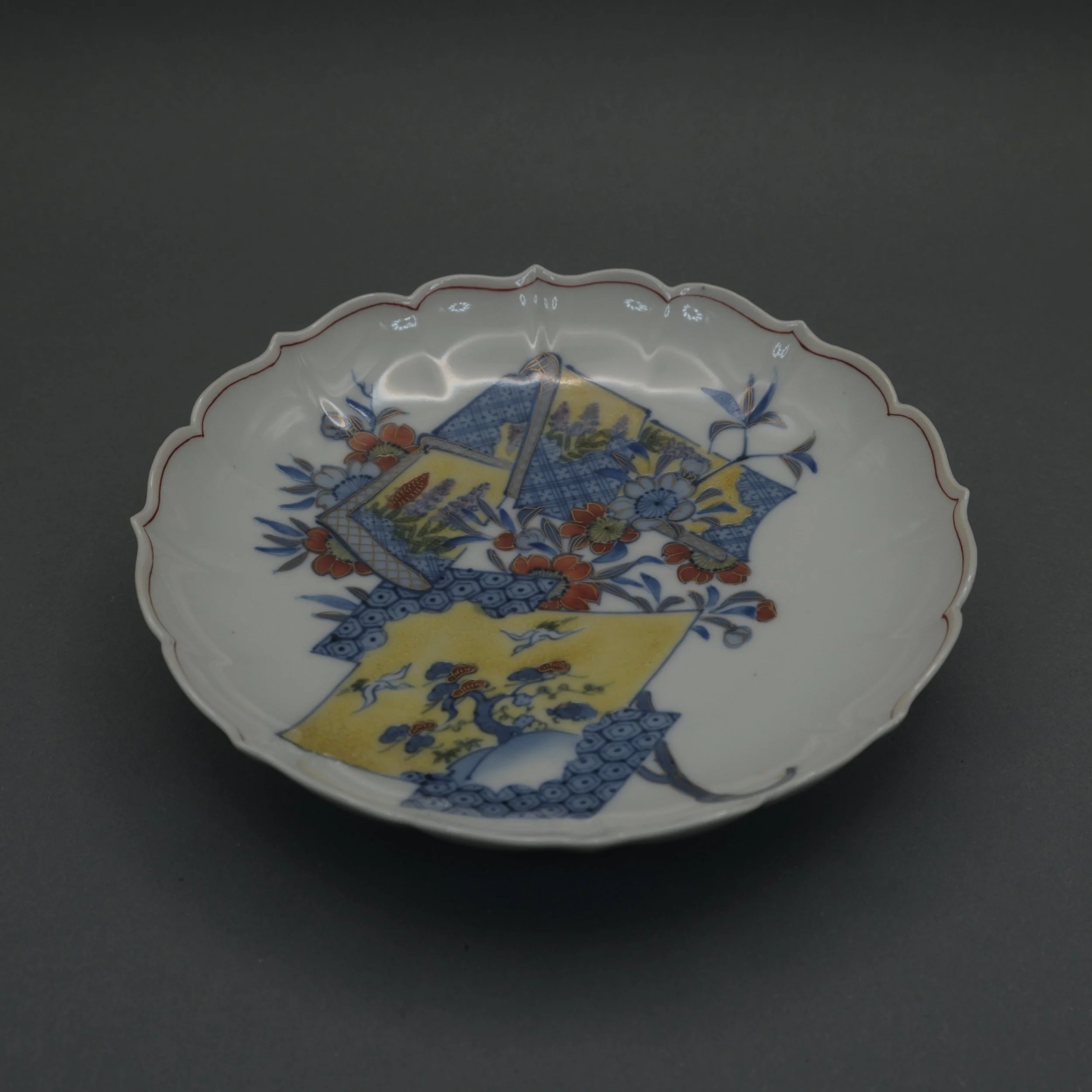
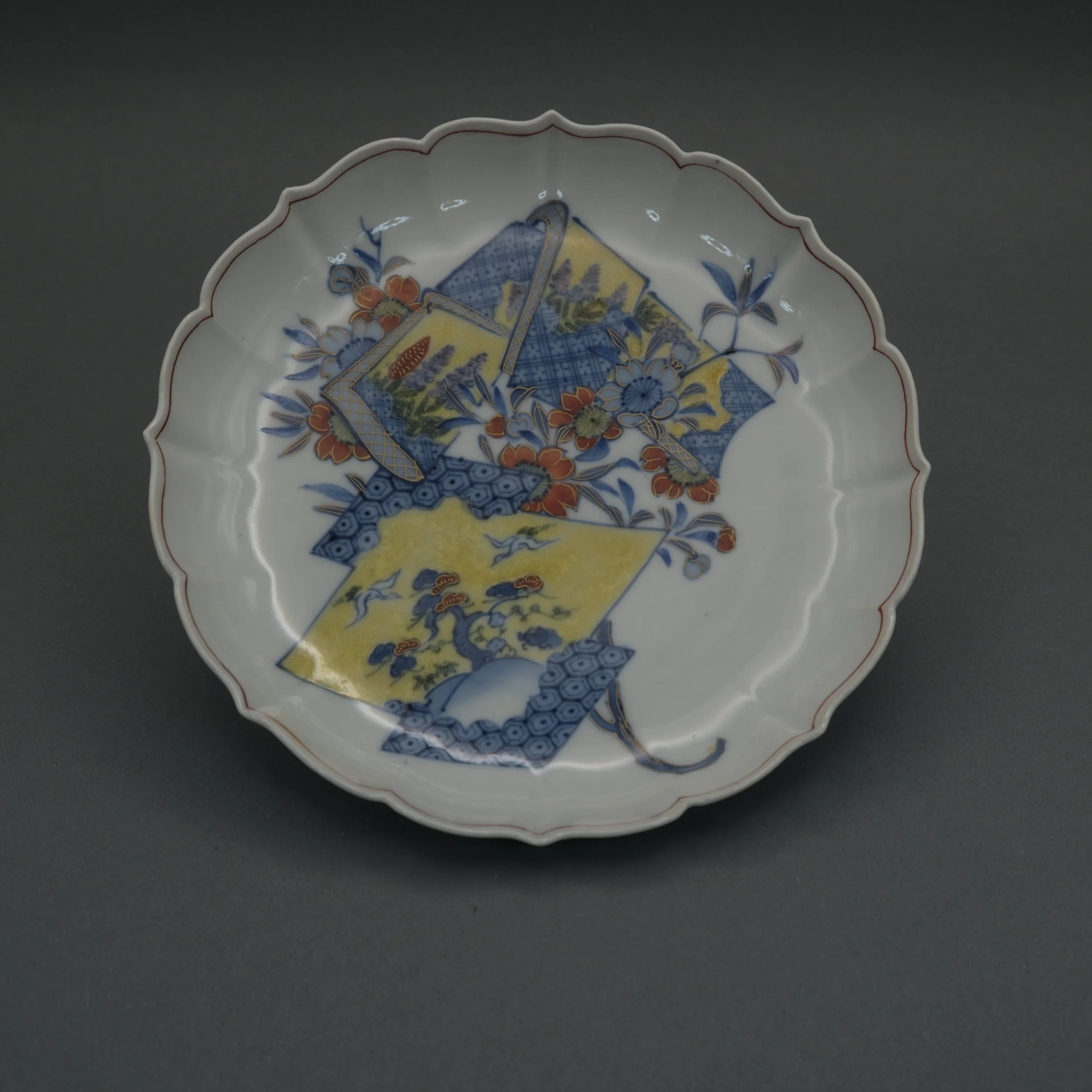
We found this set during our second visit to Yamanaka Onsen, in November 2025.
We had returned for an exhibition, hoping to see more of 米谷彰能’s yōkai collection, and on the way to the gallery we stopped again at Art551, an antique shop we had first visited in March 2024.
I was not really looking for anything.
But almost as soon as we walked in, I noticed an old wooden box tucked away beneath a table.
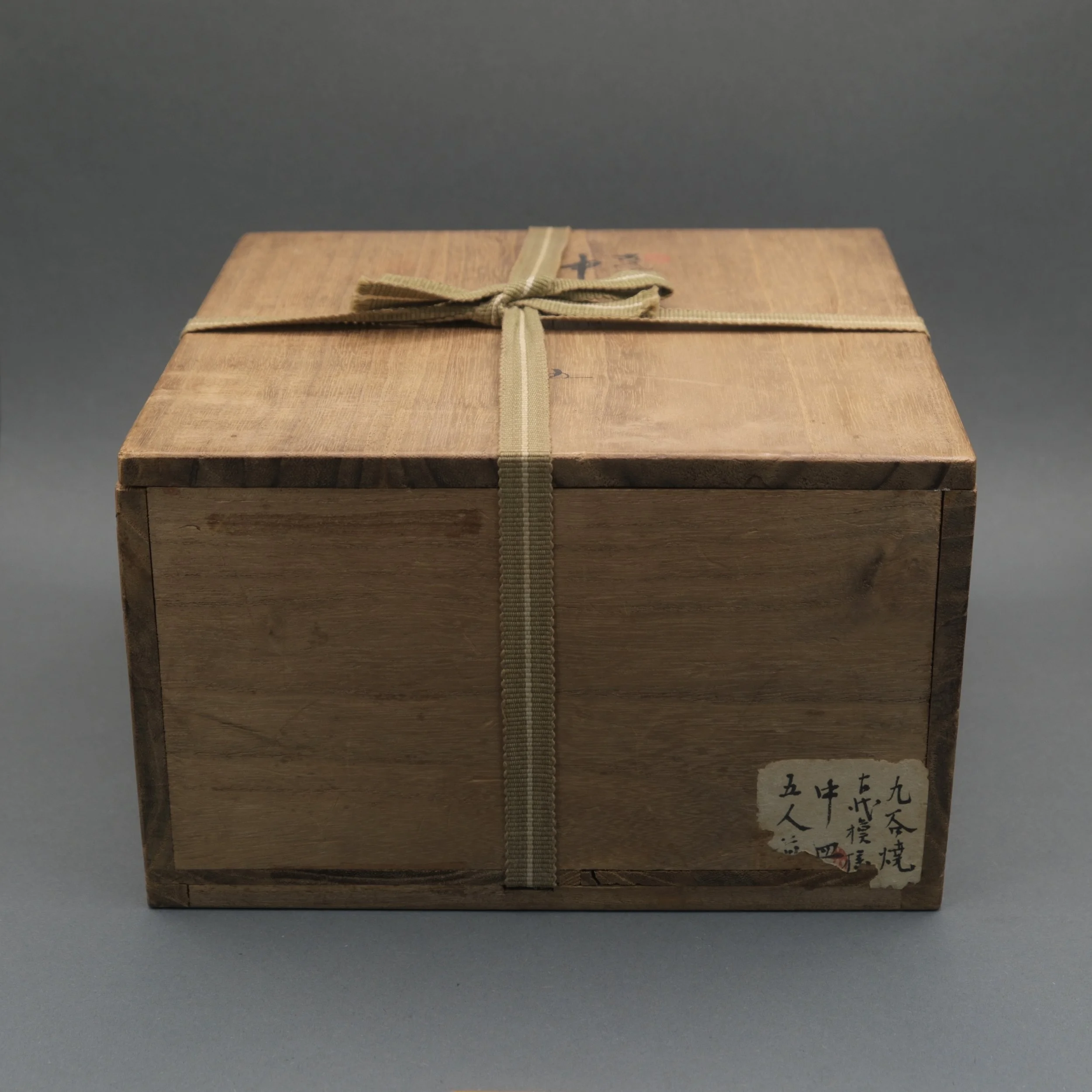
It was the box that caught me first.
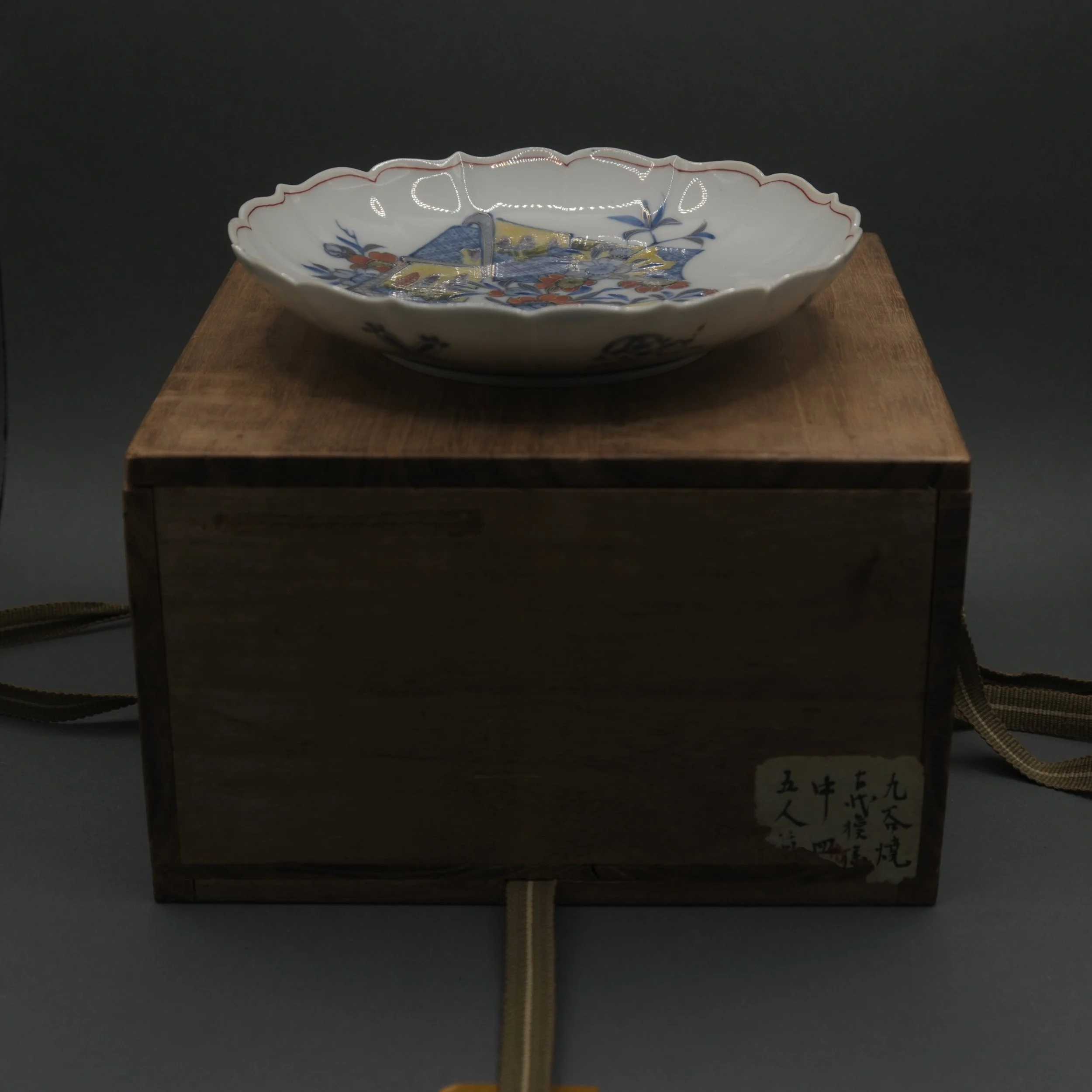
The wood was worn, the ribbon softened with age, and an old paper label was still attached to one side. Because I can read Japanese, I could immediately make out the words 古代模様中皿 — kodai moyō chūzara.
That was the moment I became properly excited.
There is something very different about finding an old object when you can read the words that have travelled with it. Before I had even opened the box, I already knew it contained a set of medium dishes with an old-style pattern, and suddenly the whole thing felt much more alive.
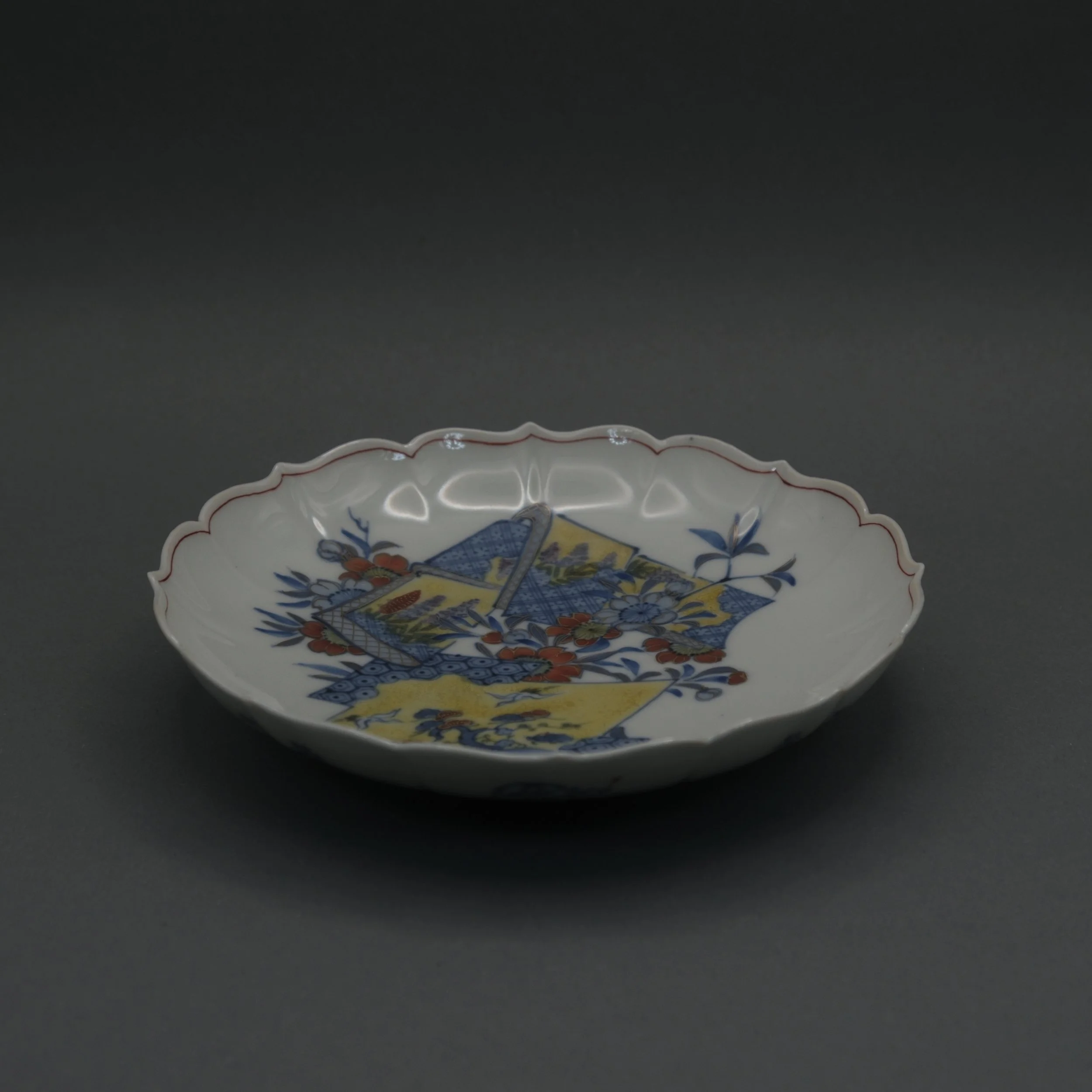
Inside was a set of five Kutani-yaki dishes.
The decoration is anything but quiet. Blue, yellow, red and green sit against the white porcelain, with layered textile-like patterns, flowers and decorative forms filling the centre. A fine red line follows the scalloped rim, while the reverse carries blue motifs around a red 福 · fuku mark.
Later, while researching the set, I found a remarkably close documented example attributed to 藤岡岩花堂 · Fujioka Gankadō. The form, front decoration, reverse motifs and fuku mark all closely matched ours.
Then there was the box itself.
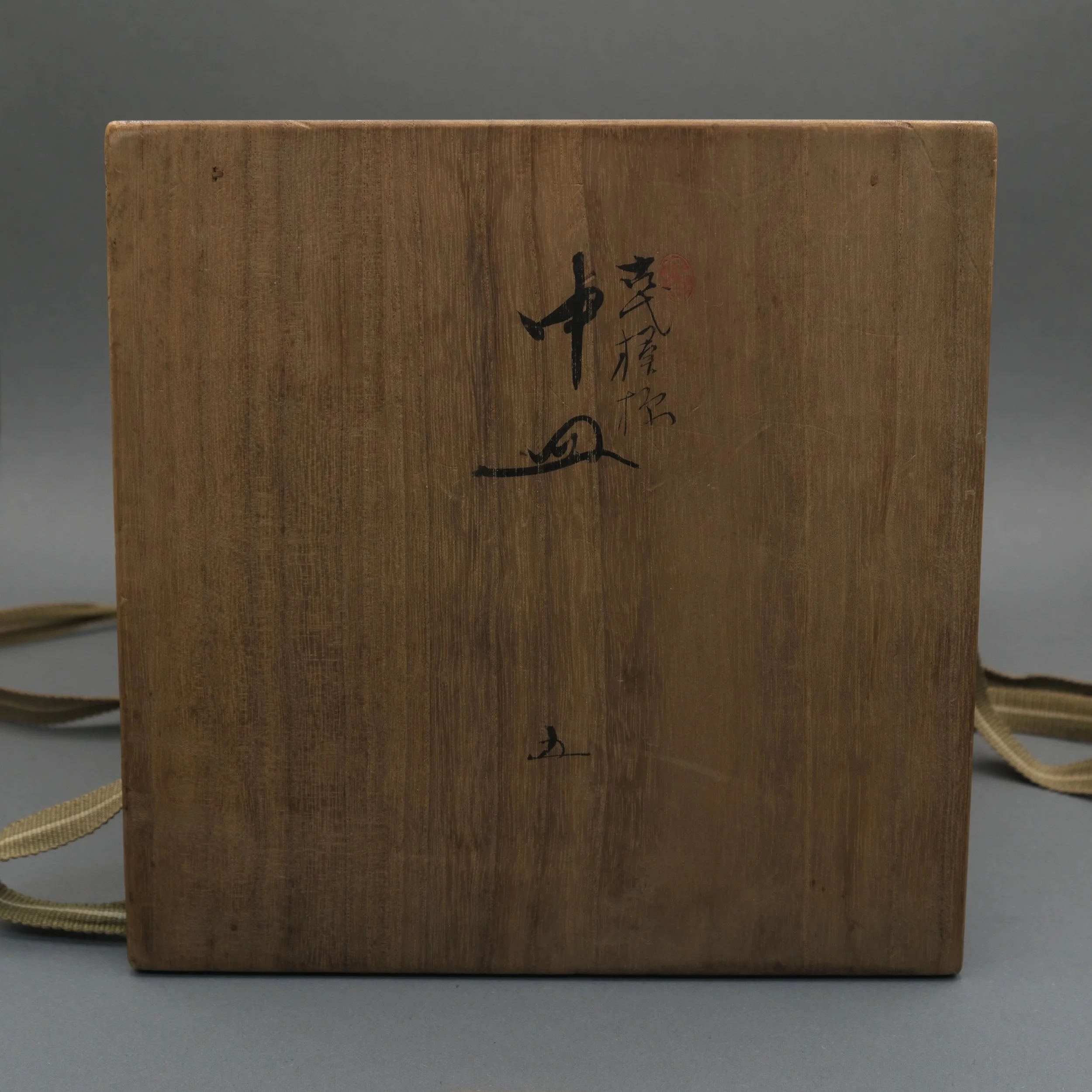
On the inside of the lid is a seal reading 金城岩花, which gave the Fujioka Gankadō identification much firmer footing. At that point, it no longer felt like just a visual resemblance.
The set is believed to date to the Meiji period, making it one of the older pieces in our collection.
Kutani has always been one of the Japanese porcelain traditions I am drawn to, but it also has a more personal meaning for me.
It was through Kutani that my husband first began to become interested in Japanese porcelain and ceramics. Little by little, what had mostly been my habit of collecting became something we started doing together.
That, however, is another story.
On that November afternoon, I simply knew I wanted this set.
Perhaps it was the colour. Perhaps it was the old box sitting quietly beneath the table. Or perhaps it was the small thrill of reading that worn label and realising that something almost hidden in the corner still carried its own name and history.
So I brought it home.
And now, whenever I look at it, I remember not only the dishes themselves, but that walk through Yamanaka Onsen, the exhibition we were heading towards, and another small chapter in the collection we have slowly built together.
藤岡岩花堂 · Fujioka Gankadō
九谷焼 · Kutani-yaki
古代模様中皿 · Kodai Moyō Chūzara
Set of five porcelain medium dishes with polychrome enamel decoration and 福 mark
Ø 17.4 cm each
Ishikawa, Japan
With original wooden box, worn paper label and 金城岩花 seal
Estimated date: Meiji period, late 19th–early 20th century
Acquired in Yamanaka Onsen, November 2025
Art551
Reference
九谷焼 · Kutani-yaki — Kutani ware
古代模様 · Kodai Moyō — old-style / classical pattern
中皿 · Chūzara — medium-sized dish / plate
福 · Fuku — good fortune / blessing
金城岩花 · Kinjō Ganka — seal inscription found inside the wooden box lid
明治時代 · Meiji period — 1868–1912